What Is Coffee Roasting?

Coffee roasting is one of the most important and fascinating parts of the entire coffee journey. It is the moment where a hard, pale-green agricultural seed is transformed into the aromatic brown beans we recognise and brew every day. Behind every cup of coffee in the UK, from speciality roasters to supermarket blends, sits a careful balance of science, craft, timing and sensory skill. Roasting is what unlocks the flavour potential created on the farm. Without it, coffee would taste grassy, herbal and almost undrinkable.

This guide explains everything you need to know about coffee roasting, from the chemistry that takes place inside the drum to how roast levels develop different flavours. Whether you are a coffee lover, a home brewer or simply curious about how beans become the drinks you enjoy, this blog tells you all you need to know about roasting coffee. 


What You Will Learn in This Blog

  • What coffee roasting is and why it matters

  • The stages of the roasting process

  • Roast level explained for beginners

  • How flavour develops during roasting

  • Key chemical reactions inside the coffee bean

  • Light, medium and dark roast characteristics

  • How roast level affects brewing

  • How UK roasters approach speciality coffee

  • A final guide to choosing the right roast for you


What Is Coffee Roasting?

Coffee roasting is the controlled heating of green coffee beans to develop aroma, flavour, colour and solubility. Green coffee is dense, grassy and contains none of the familiar coffee notes we expect. Roasting triggers hundreds of chemical reactions which caramelise sugars, break down acids and create the aromatic compounds we associate with chocolate, fruit, nuts, spices and florals. Roasting is both a science and an art. The roaster must manage heat, airflow and time with extreme precision to avoid underdeveloping or burning the beans. Every coffee origin, variety and processing method responds differently to heat, making roasting a skill that takes years to master.


How Coffee Roasting Works

Roasting typically takes between 8 and 14 minutes depending on the style of roast and the equipment used. Most speciality roasters in the UK use drum roasters, which rotate a batch of green coffee above a flame or electric heat source. Throughout the process, roasters listen, observe colour changes, track bean temperature and adjust airflow to shape flavour.

The roasting process can be broken into several key stages.


1. Drying Phase

Green coffee beans start with high internal moisture. During the first part of roasting, the beans absorb heat and slowly lose water. The colour begins to shift from green to pale yellow, and grassy aromas begin to fade. This stage is essential. If drying is rushed, the beans can roast unevenly. If it is too slow, the cup may taste flat. Roasters often describe this moment as laying the foundation for an even development later.


2. Maillard Reaction

Once the beans reach around 150°C, they enter the Maillard phase. This is where the real transformation begins. The Maillard reaction is the same browning chemistry that happens when you toast bread or sear a steak. Sugars and amino acids combine to create hundreds of flavour compounds. At this stage, beans shift from yellow to light brown and begin to smell like toasted grain, caramel or warm bread. The length of the Maillard phase has a big impact on flavour. A longer Maillard creates more sweetness and complexity. A shorter Maillard tends to highlight acidity.


3. First Crack

As beans continue to heat, internal pressure builds until the beans physically pop. This is called first crack. It is a key milestone and marks the transition from the Maillard stage into development. The bean expands, the structure becomes more brittle and carbon dioxide begins to form. From this point forward, every second matters. Extending development builds sweetness and body. Ending the roast shortly after first crack keeps acidity bright and lively. This moment defines whether a roast leans light, medium or dark.


4. Development Phase

After first crack, the roaster shapes the final flavour. Too short a development results in underdeveloped coffee which can taste grassy or sour. Too long produces roasty, smoky or ashy flavours. A well judged development brings balance, sweetness and clarity. For speciality coffee, development is usually 60 to 90 seconds, though this changes depending on the roaster’s style. Development is where roasters make creative decisions to highlight fruitiness, chocolate notes or whatever makes that coffee special.


5. Second Crack and Dark Roasting

If roasting continues past first crack, the beans eventually reach second crack. Oils migrate to the surface, the beans become shiny and the flavour becomes bold, smoky and heavy. Second crack roasting is typical of French and Italian style coffees. In the UK speciality scene, dark roasts are less common, but they remain popular for people who enjoy classic café style espresso.


Roast Levels Explained

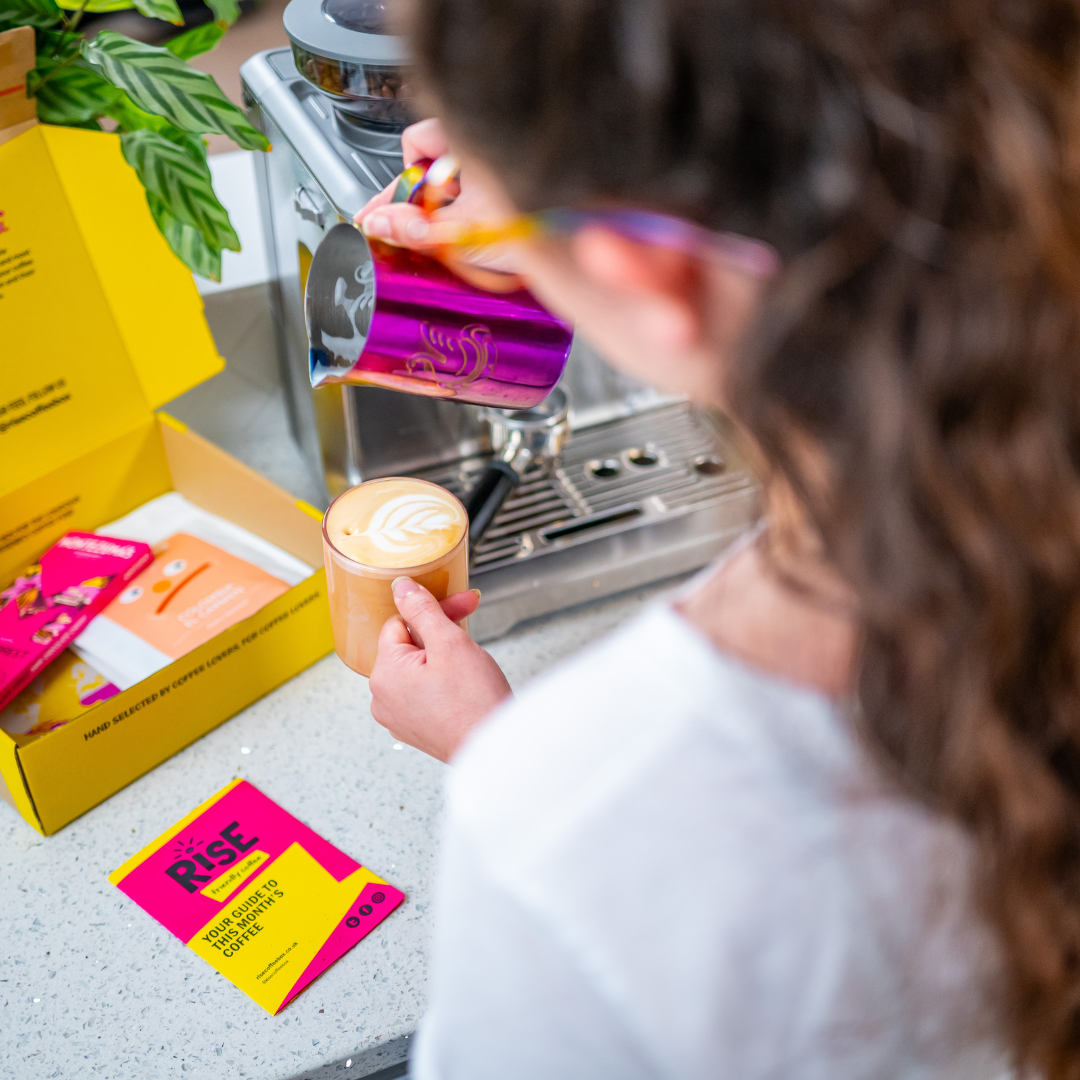
Roast level is one of the easiest ways for consumers to understand flavour. Here is a clear explanation of each roast type and why it matters. At RISE coffee box we generally include medium to medium dark roast as we find that this level locks in all the flavour while still giving the coffee a strong bold feel.     

Myth buster. Darker roasts DO NOT have more caffeine! 

Light Roast

Light roasts showcase the natural flavour of the coffee origin. Expect bright acidity, fruit notes and a lighter body. These roasts are most popular for filter brewing. They are favoured in the speciality coffee world because they highlight terroir, variety and processing.

Medium Roast

Medium roasts strike a balance between sweetness, body and acidity. They maintain origin character while adding a smoother, rounder mouthfeel. Many UK roasters choose medium roasts for versatility, as they work well for both espresso and filter.

Dark Roast

Dark roasts feature bold, rich flavours with smoky or toasted characteristics. Acidity becomes low and sweetness shifts to caramel or dark chocolate. These roasts are common in traditional European espresso and supermarket blends. They are ideal for people who prefer a strong, deep coffee profile.


The Science of Flavour Development

More than eight hundred aromatic compounds are created during roasting. These include florals, chocolates, caramels, nuts, berries and spices. The balance of acids, sugars and aromatic compounds determines the flavour profile. Light roasts preserve more acidity and fruitiness. Medium roasts create deeper sweetness. Dark roasts highlight bitterness and heavy body.

Roasting also affects solubility. Light roasts need more precise brewing and often higher temperatures. Dark roasts extract more easily, making them forgiving for beginners.


How UK Roasters Approach Coffee Roasting

The UK has a growing speciality coffee scene known for emphasising transparency, provenance and light to medium roasting styles. Roasters often profile each coffee individually to highlight terroir and sweetness rather than roasting everything to the same level. Many invest heavily in cupping, sample roasting and data tracking to achieve consistency.


Choosing the Right Roast for You

If you enjoy fruity and floral flavours, choose light roast. If you want a smooth, balanced cup, go for medium. If you prefer bold, strong and traditional flavours, dark roast is ideal. The best way to find your preference is to try a few and compare. Coffee subscription services like RISE make this easy by showcasing different roasters and roast styles each month.


Final Thoughts on Coffee Roasting

Coffee roasting is a sensory craft built on precision, chemistry and creativity. It shapes flavour more than any other stage after farming. Understanding roasting helps you appreciate why coffees taste the way they do and why different roasters produce such distinct results. Whether your favourite brew is fruity, sweet or bold, those flavours are all created through the skilled hands of a roaster turning raw green beans into something special.


Leave a comment

Please note, comments must be approved before they are published

This site is protected by hCaptcha and the hCaptcha Privacy Policy and Terms of Service apply.


MONTHLY COFFEE DELIVERED TO YOUR DOOR

Enjoy a variety of independent coffee each month
SUBSCRIBE & SAVE

GIFT SUBSCRIPTION

Give the gift of specialty coffee to a coffee lover in your life
SHOP GIFTS