

Organic Specialty Coffee: What Is It And Why Some of the Best Coffees Aren’t Certified Organic

Organic Specialty Coffee: What Is It And Why Some of the Best Coffees Aren’t Certified Organic
Organic coffee has become increasingly popular in the UK, especially among conscious consumers who want their daily brew to be better for their health, for farmers, and for the planet. Walk into any supermarket or specialty café and you’ll see “organic” proudly displayed on bags of coffee — often alongside words like ethical, sustainable, or single origin.
But here’s where things get confusing: some of the very best specialty coffees in the world aren’t certified organic at all.
So what’s really going on? Why do so many exceptional coffees from smallholder farms skip organic certification — and does that mean they’re less ethical or less sustainable?
Let’s break it down.
What Is Organic Coffee?
Organic coffee is coffee grown without the use of synthetic fertilisers, pesticides, herbicides, or genetically modified organisms (GMOs). Instead, farmers rely on natural methods such as composting, shade cover, crop rotation, and natural pest management to maintain healthy coffee plants.
In the UK, for coffee to be sold as “organic”, it must meet strict certification standards — typically overseen by bodies such as the Soil Association — and be audited regularly to prove compliance.
Organic certification gives consumers reassurance and transparency, which is why it has become such a powerful label.
Why Is Organic Coffee So Popular?
Organic coffee appeals to UK consumers for several reasons:
-
It aligns with growing interest in cleaner, more natural food and drink
-
It’s associated with environmental protection and healthier ecosystems
-
It suggests better treatment of land and farming communities
-
It feels like a simple way to make a more ethical choice
All of these reasons are valid — but they don’t tell the whole story.
The Big Misunderstanding Around Organic Coffee
One of the biggest misconceptions is this:
If a coffee isn’t certified organic, it must be sprayed with chemicals.
In reality, this often couldn’t be further from the truth.
Many specialty coffees grown by smallholder farmers are produced using organic or near-organic methods, but without the official certification. The reason isn’t a lack of care — it’s usually a lack of money.
The True Cost of Organic Certification
Organic certification is expensive, complex, and ongoing.
For a smallholder farmer — often working a few hectares of land, sometimes less — certification can involve:
-
Initial inspection and application fees
-
Annual renewal costs
-
Detailed paperwork and record-keeping
-
Changes to infrastructure and storage
-
Time spent dealing with auditors instead of farming
These costs can run into thousands of pounds, which is an enormous sum in many coffee-growing regions.
For farmers already operating on razor-thin margins, organic certification often simply isn’t financially viable — even if their farming practices already meet organic standards.
Smallholder Farmers: Too Poor for Chemicals, Too Poor for Certification
Here’s a crucial point that’s often overlooked:
Many smallholder farmers can’t afford synthetic pesticides anyway.
In regions across Latin America, Africa, and Asia, smallholder coffee farmers often rely on traditional methods because:
-
Chemicals are expensive and hard to access
-
Labour is more readily available than inputs
-
Farms are intercropped with bananas, fruit trees, and vegetables
-
Coffee is grown under shade, naturally reducing pests
In other words, these farms are often organic by default, not by certification.
Yet because they can’t afford the paperwork and fees, their coffee cannot legally be sold as “organic” in the UK or EU.
Why Specialty Coffee Often Goes Uncertified
Specialty coffee operates differently from commodity coffee.
Instead of relying on certifications alone, specialty buyers focus on:
-
Direct relationships with farmers
-
Transparency around growing and processing methods
-
Quality, traceability, and consistency
-
Paying higher prices for better coffee
For many specialty roasters and importers, it makes more sense to pay farmers more directly rather than asking them to spend money on certification that doesn’t improve the coffee itself.
In some cases, the cost of certification would actually reduce the farmer’s income.
Does Certification Always Equal Sustainability?
Not necessarily.
Certification systems can be valuable, but they are not perfect. Some large farms can afford certification while still engaging in questionable practices, while smaller farms doing incredible work are excluded simply because they lack resources.
True sustainability often looks like:
-
Healthy soil built over generations
-
Shade-grown coffee that supports biodiversity
-
Careful water use during processing
-
Long-term relationships with buyers
-
Stable income for farming families
These things don’t always come with a logo on the bag.
Organic vs Specialty: What Really Matters?
When choosing coffee in the UK, it’s helpful to look beyond a single label.
Ask questions like:
-
Is the coffee traceable to a specific farm or community?
-
Does the roaster talk openly about how the coffee is grown?
-
Are farmers paid fairly for their work?
-
Is the coffee grown under shade or in diverse ecosystems?
In many cases, a non-certified specialty coffee may be doing more good — for both people and planet — than a certified organic coffee produced at industrial scale.
Why This Matters for UK Coffee Drinkers
As UK consumers become more thoughtful about what they buy, it’s important to understand the nuance behind the labels.
Organic certification is valuable and should be celebrated — but it shouldn’t be the only marker of ethical or sustainable coffee.
Some of the most carefully grown, environmentally sensitive coffees in the world don’t carry the organic stamp simply because the farmers can’t afford it.
The Takeaway: Look Beyond the Badge
Organic coffee isn’t a bad thing — far from it. But it’s not the whole story.
When you choose specialty coffee from smallholder farms, you’re often supporting:
-
Low-input, environmentally conscious farming
-
Communities that can’t afford certification but farm responsibly
-
Higher quality coffee grown with care and intention
The most important thing is transparency, not just certification.
At its best, specialty coffee is about people, flavour, and long-term impact — and sometimes the most ethical choice doesn’t come with a logo at all.


Share this
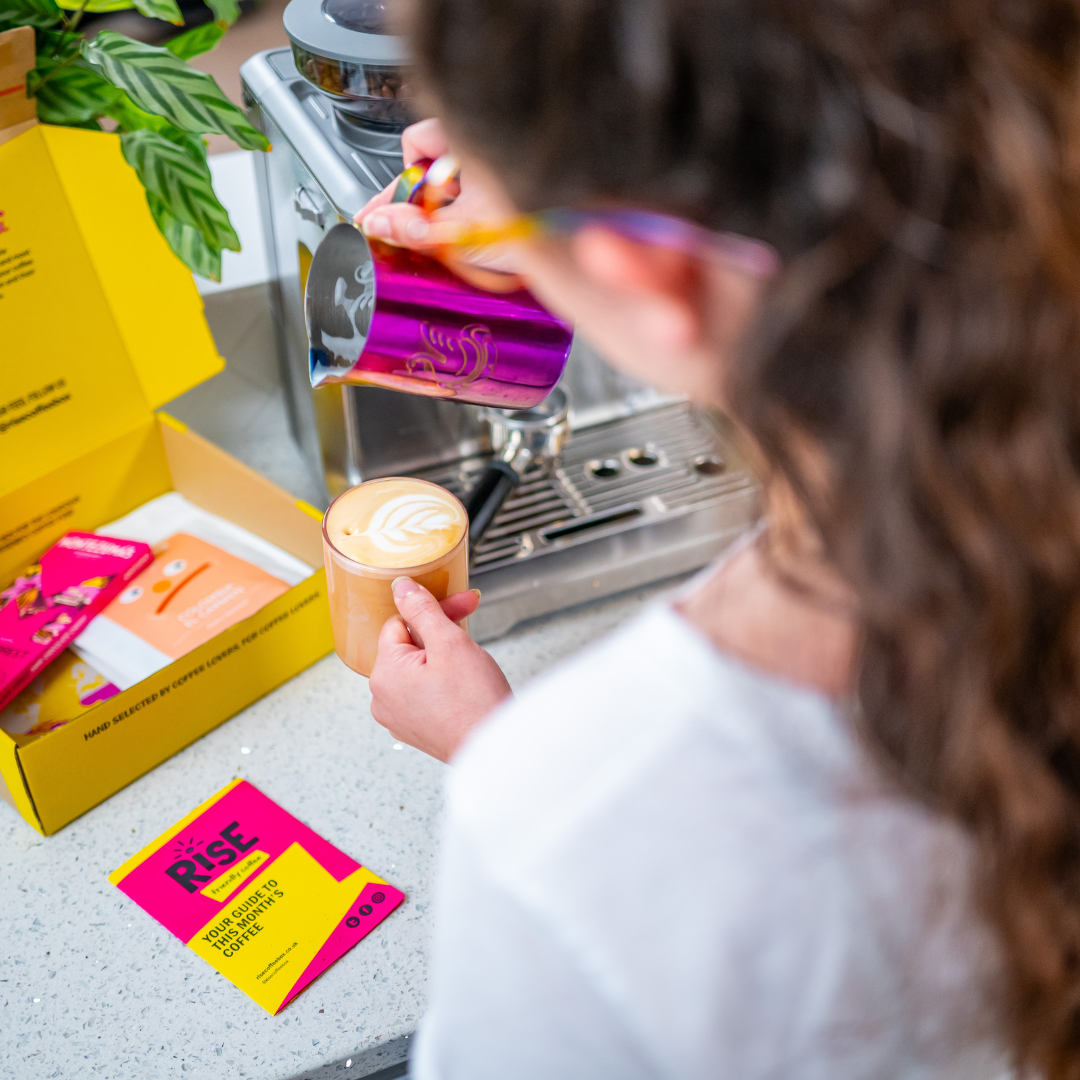
Perfect your latte art at home

Your Next Favourite
Coffee
Awaits.
Every month we blind taste hundreds of coffees so you don't have to. Two new independent roasters, freshly roasted, delivered straight to your door.
↔ Don't love your first coffee? We'll swap it.
We're so confident you'll love our coffee picks — we'll swap a bag for free if you don't enjoy it T&Cs apply. Click here to get your first box.
Choose your plan
Start your subscription.
Two coffees from two independent roasters
Two bags from each roaster
Prepaid 1, 3, 6 or 12 months
Pick your box
2 or 4 bags
Choose grind
Bean or ground
Set delivery
Change anytime


Leave a comment