

101 Guide On How To Create Latte Art
Last updated:
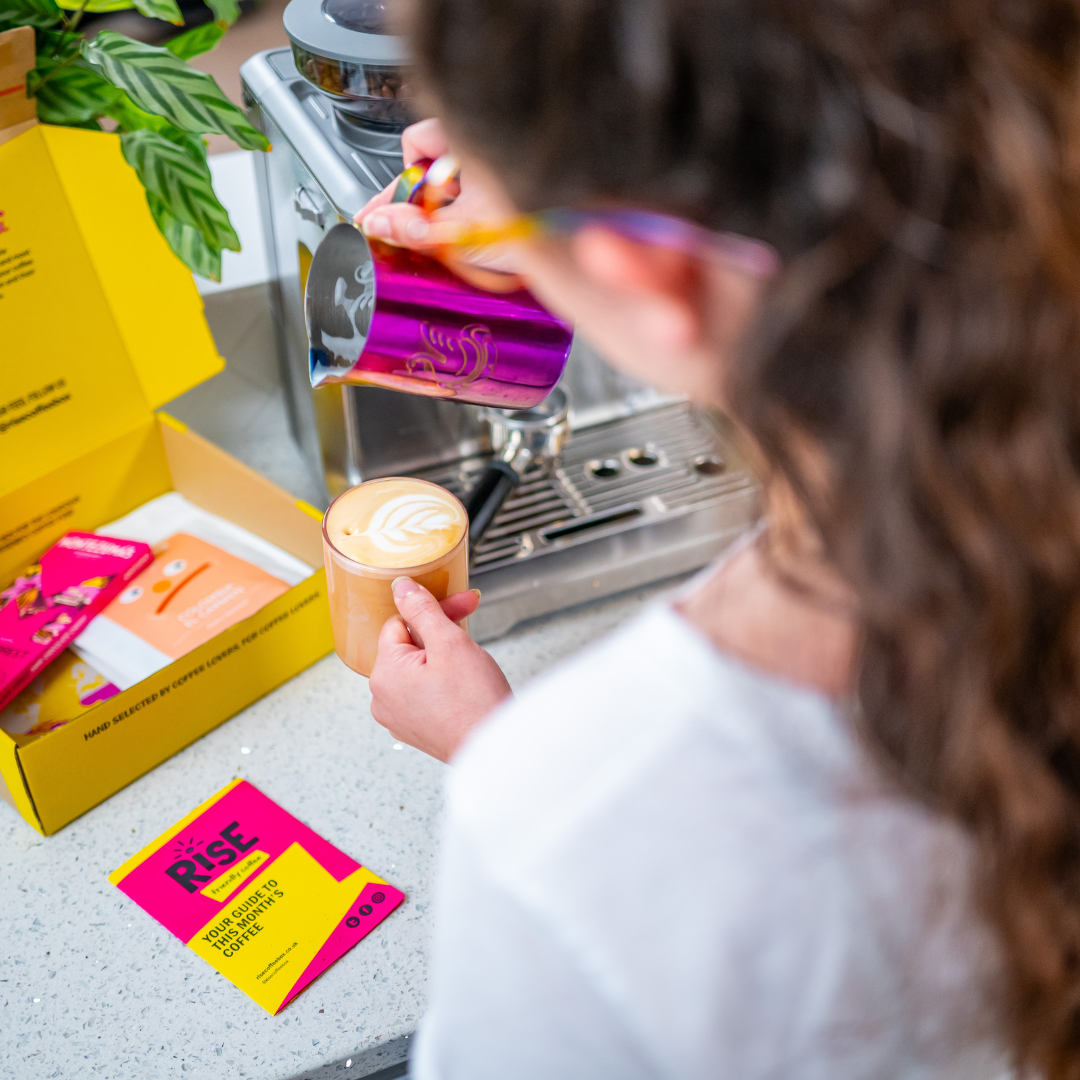
Ever been handed a coffee with a neat little heart or leaf on top and wondered how they do it? It can look like a barista-only trick, but the good news is you can make it at home. Latte art is the pattern you create by pouring steamed milk into a shot of espresso, and you can make it at home with two things, silky microfoam and a slow, steady pour. Everything else is practice. This guide covers both, from frothing your milk (yes, even without a frother) to pouring your first heart, tulip and swan.
One thing worth saying before you start. Great coffee is about taste, not looks. That smooth microfoam and rich espresso will taste just as good with or without a swan on top, so do not be put off if your first attempt looks more like abstract art than a tidy rosetta. The pattern is the fun extra. Enjoy the process.
At RISE Coffee Box, we make speciality coffee fun, accessible and ethical. We send you the best independent, taste-tested coffees every month, so you always have high-quality beans to experiment with. Here is how to give latte art a go at home.

What you will need
You do not need a professional cafe setup, but a few key tools make a difference.
- A shot of espresso. This is the base of all great latte art. No machine? See the alternatives below.
- A milk steaming wand. Usually built into your espresso machine, it creates that smooth, silky microfoam.
- A steam pitcher (milk jug). A metal jug with a pointed spout for precise pouring.
- Fresh, high-quality coffee. The foundation of everything. Running low? Order a box online here.
- Milk or a plant-based alternative. Whole milk works best, but barista-edition oat milk is a strong option.
Two bonus extras help once you are past the basics. A thermometer gets the milk temperature right, and a toothpick lets you add fine detail. You will find jugs, thermometers and machines in our coffee equipment collection.
No espresso machine? No problem
- Aeropress or Moka pot. Both make a strong, espresso-like coffee that holds a pattern well.
- French press. Brew a stronger coffee using less water, then froth your milk separately.
Avoid a light filter coffee for this, as it is too thin to carry a design.
How to froth milk for latte art, with or without a frother

Silky microfoam is the real secret to latte art. Whole milk or barista oat milk froth best. Heat your milk but never let it boil. You are aiming for roughly 55 to 65 degrees Celsius, or the point where you can no longer hold the jug comfortably for more than a second.
If you have a steam wand
- Fill your pitcher with cold milk.
- Submerge the wand just below the surface and turn it on. Keep it near the top to create that creamy foam.
- As the milk expands, move the wand a little deeper and let the milk swirl into a smooth texture. For more foam, move the wand higher up the jug.
- Stop at 55 to 65 degrees. If the milk comes out too bubbly or too flat, do not worry, even baristas get it wrong sometimes.
No steam wand and no frother? Try these
- Jar with a tight lid. A cocktail shaker works too. Pour in warm milk, seal it, and shake hard for 30 to 60 seconds. Microwave for 20 seconds afterwards to stabilise the foam.
- French press. Pour in warm milk and pump the plunger up and down until foamy.
- Whisk. Whisk the milk in a pan over gentle heat to get the bubbles going.
- Handheld frother. A cheap, battery-powered whisk aerates milk in seconds.
If you are switching from dairy, choose a barista-edition oat milk. It steams and froths far better than the standard version.
No pitcher? A small jug, measuring cup or anything with a narrow spout will do for pouring, even a gravy jug. Just be precise.
How to pour latte art, step by step

Now for the fun part, turning that microfoam into coffee art.
- Get in position. Tilt your cup to about a 45 degree angle. Hold your milk jug around four inches above the cup.
- Start pouring. Pour slowly into the centre of the espresso, keeping that height, then move around the cup to mix the milk in.
- Fill and drop in. Once the cup is around two-thirds full and the liquid nears the edge, stop but keep the cup tilted. Bring the jug down as close to the surface as you can, right in the centre, and pour again, a little faster this time. Getting close to the surface is what makes the pattern appear.
- Level off. As the cup fills, tip it back to level. This stops it overflowing and pushes your design into the right spot.
- Make the shape. Slightly raise the jug and draw your hand back through the centre of the cup, keeping everything as centred and symmetrical as you can. That gives you the classic latte shape.
- Practise, practise, practise. You probably will not nail it first time, and that is normal. It comes with repetition, and if it goes wrong you can always swirl it and call it abstract art.
Three things decide most of your result, well-textured milk, the height of your pour, and your pour speed.
Five easy latte art designs to try
- Heart. Start pouring in the centre, then pull the jug up quickly at the end for that signature heart shape.
- Tulip. Layer small blobs of milk on top of each other, then cut through the middle with a quick pull.
- Swan. One of the trickiest. Make a tulip first, then drag a fine line up the side for the neck and finish with a tiny heart as the head.
- Bear. Pour two small blobs for ears and a larger one for the face, then use a toothpick to draw the nose and eyes.
- Flower. Pour a central dot, then drag a toothpick through it to form petal shapes.
The key to all of them is a steady hand and control. Take it slow, as smooth, unhurried movements create the best results.
Why great coffee makes better latte art
Latte art starts with good coffee. Every month, RISE Coffee Box sends you independent, ethically sourced coffees from some of the UK's best roasters. No guessing and no bad beans, just taste-tested coffee hand-picked for you.
- Taste-tested. Every coffee is tried and tested before it reaches your cup.
- Always something new. Different roasters, origins and flavours to explore. A rich, chocolatey Brazilian one month, a bright, fruity Ethiopian the next.
- Ethical and sustainable. As a B Corp certified business, we only work with responsible roasters.
Want to practise with better beans without committing straight away? Try our free coffee trial first, then tag us in your foamy creations @risecoffeebox.
Latte art FAQs
What is latte art, or coffee art?
Latte art, often called coffee art, is the decorative pattern created by pouring steamed, textured milk into a shot of espresso. Common designs include hearts, tulips, rosettas and swans. It is made by combining silky microfoam with a controlled pour, and it does not change the taste of your coffee.
Can you make latte art without an espresso machine?
Yes. An Aeropress or Moka pot makes a strong, espresso-like coffee that holds a pattern well. Avoid light filter coffee, as it is too thin. You will also need to froth your milk, which you can do without any special kit.
How do you froth milk without a frother?
Heat your milk without boiling it, then shake it hard in a sealed jar for 30 to 60 seconds, pump it in a French press, or whisk it in a pan. A cheap handheld frother also works. Whole milk and barista oat milk froth best.
What milk is best for latte art?
Whole milk gives the most reliable, velvety microfoam. For a plant-based option, choose a barista-edition oat milk, which steams and froths far better than standard versions.
Why will my milk not froth properly?
It is usually temperature or technique. Start with cold milk, aim for 55 to 65 degrees Celsius, and do not let it boil. If the foam is too bubbly or too flat, adjust how near the surface you steam, and keep practising.
Does latte art affect how the coffee tastes?
No. Great coffee is about taste, not looks. Well-textured microfoam feels lovely to drink, but the pattern on top is purely for enjoyment.
How long does it take to learn latte art?
Most people can pour a rough heart within a few sessions, but consistency takes regular practice. Start with the heart, then work up to the tulip and swan.


Share this
Perfect your latte art at home

Your Next Favourite
Coffee
Awaits.
Every month we blind taste hundreds of coffees so you don't have to. Two new independent roasters, freshly roasted, delivered straight to your door.
↔ Don't love your first coffee? We'll swap it.
We're so confident you'll love our coffee picks — we'll swap a bag for free if you don't enjoy it T&Cs apply. Click here to get your first box.
Choose your plan
Start your subscription.
Two coffees from two independent roasters
Two bags from each roaster
Prepaid 1, 3, 6 or 12 months
Pick your box
2 or 4 bags
Choose grind
Bean or ground
Set delivery
Change anytime


Leave a comment